As of 13 October 2026: a founder-operated local R&D build connecting Think to an early Model workflow, with optional live AI support. These 9 October captures use fictional practice records and predate Model. Hosted learner access and the full demo-and-presentation journey remain ahead.
01 · THE DIRECTION
Learn the craft by doing the work.
An educational product studio for learners who may be new to product development, with Irish Transition Year as the current audience focus. Investigate an idea, meet professional roles in context and learn to explain the choices you make.
The intended eight-stage journey leads towards a controlled product demo and a learner-owned presentation. Meaningful choices should shape how the product works. Revising, parking or stopping with a clear reason is also a legitimate outcome.
Working today: Think and early ModelA current approved brief opens a saved main journey in Model, with deliberate source updates and optional Product Designer support. Fuller modelling and the later stages remain ahead.
02 · THE LOCAL APP
Keep the evidence with the idea.
Saved work connects Think to the first Model journey. These earlier captures show the evidence, brief and review that lead into it. Observations, AI suggestions and human decisions keep their own place.
01
Find out. Then explain.
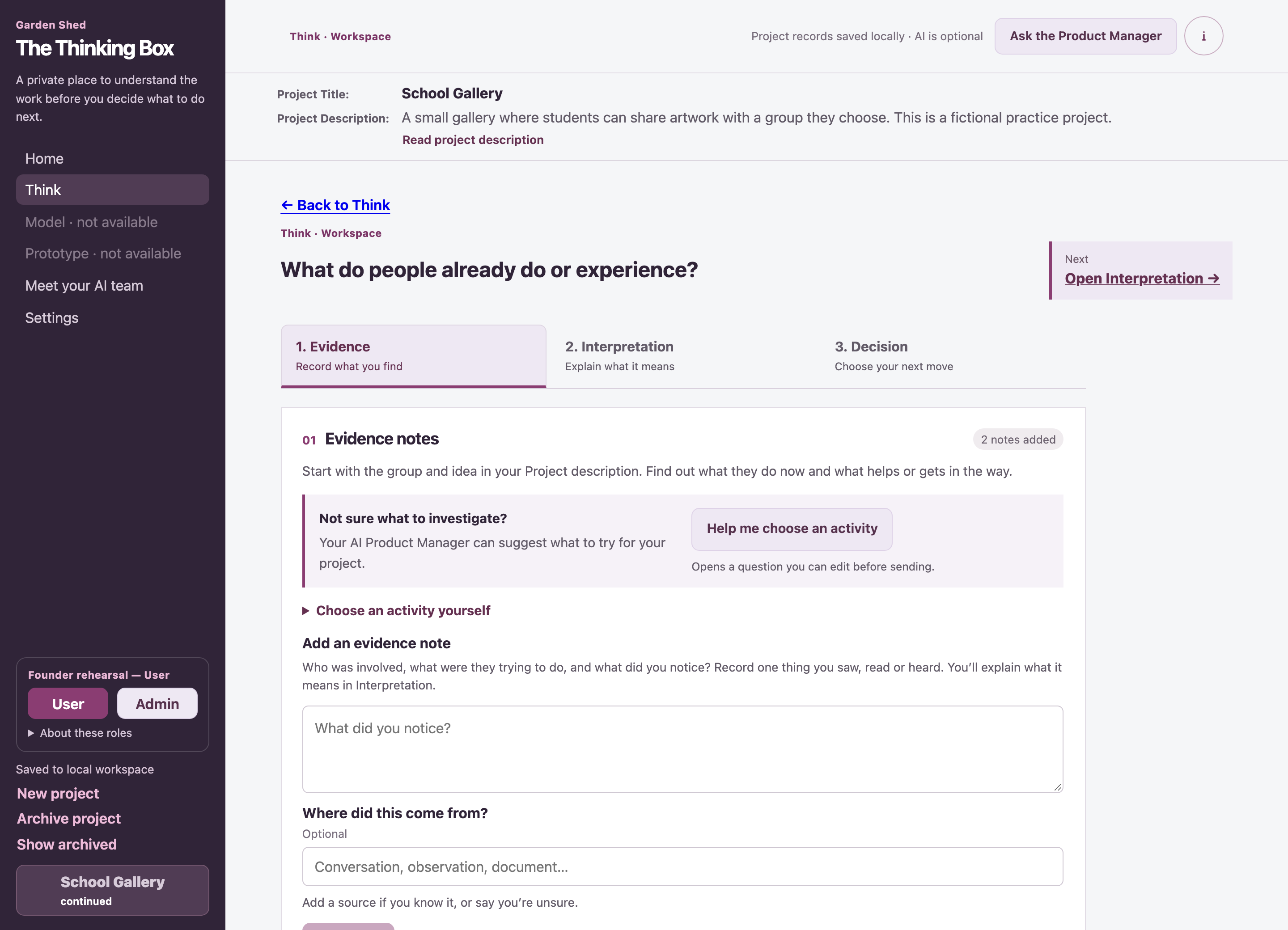
Give the idea context and investigate one question. Record what you saw, read or heard, save your interpretation and choose Continue, Revise, Park or Stop with a reason.
Evidence workspace · 9 October 2026 · fictional practice content · Open image for full size
02
Make a brief you can explain.
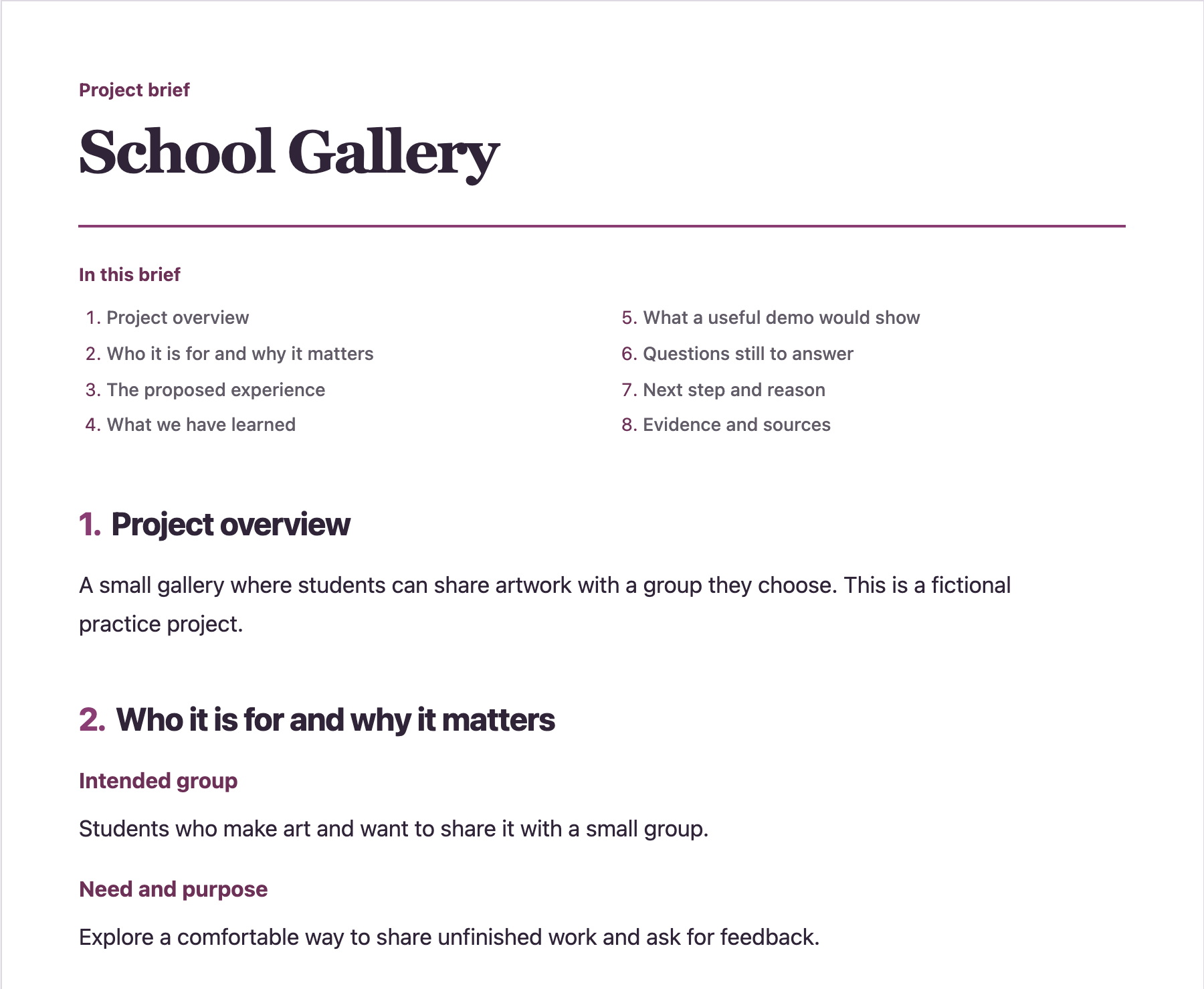
Bring your context, intended audience, proposed experience, interpretation and decision into one readable proposal. The complete evidence and sources stay inside the document.
Project brief · 9 October 2026 · eight sections, including evidence and sources · Open image for full size
03
Review a version. Keep the history.
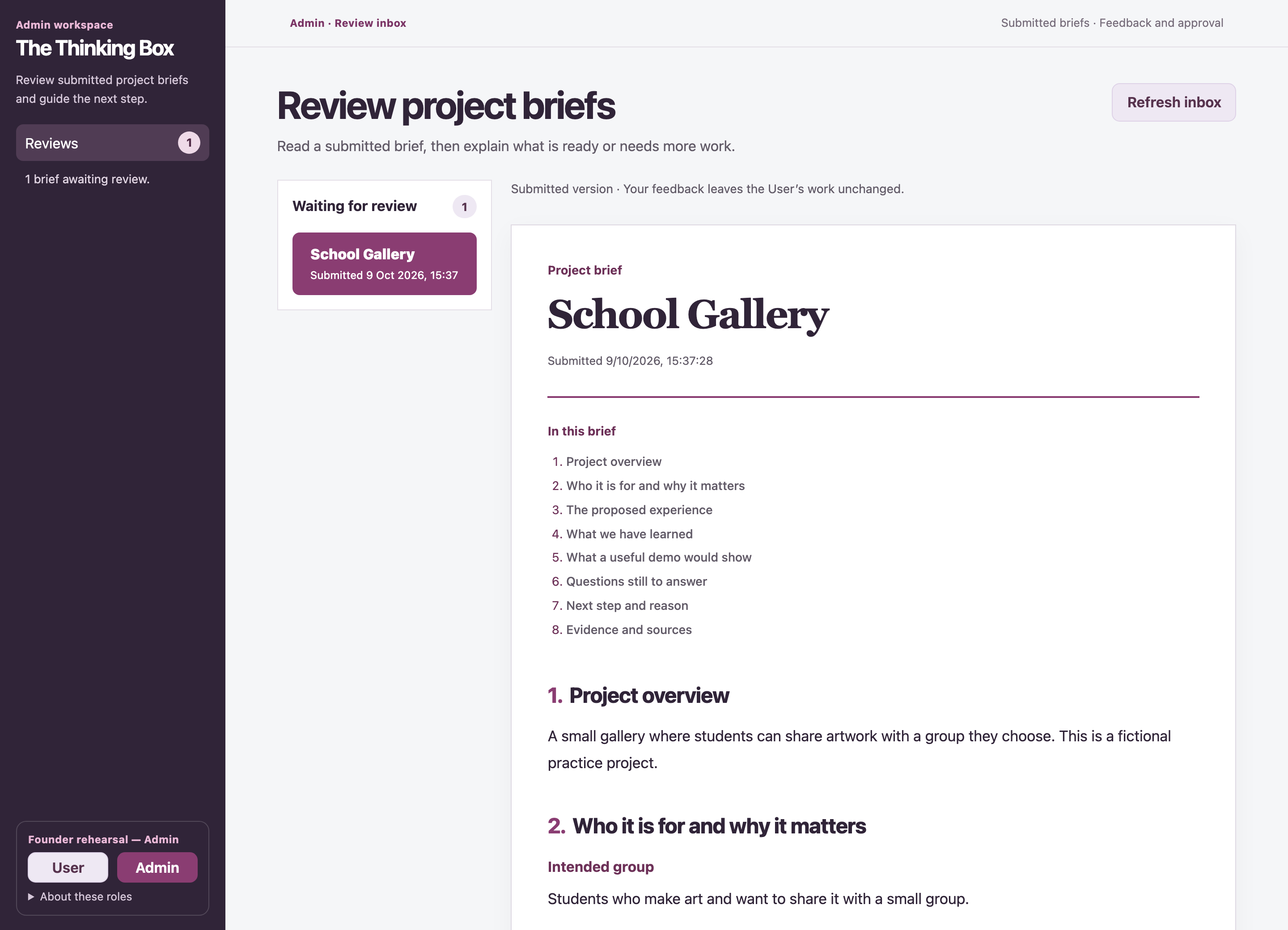
Preview the saved brief and submit a fixed version. Admin can request changes or approve progression with feedback. Revisions preserve earlier submissions and the evidence they contained.
Admin review · 9 October 2026 · local role rehearsal, not classroom access · Open image for full size
03 · SUPPORT & AUTHORSHIP
AI offers a perspective. You decide.
Three connected professionals.
AI support is optional. Activities, the evidence-to-brief journey and manual Model work remain available without it.
The Product Manager explains concepts, suggests activities and drafts idea notes when asked.
The Product Researcher challenges a saved interpretation using the supplied evidence.
The Product Designer discusses the saved Model journey and offers step changes for explicit review, using its approved source brief and feedback.
The learner keeps authorship.
Sending a question, accepting an idea note, saving an interpretation and making a decision are deliberate human actions.
Accepted AI idea notes stay labelled as assisted planning material.
An AI suggestion cannot become evidence, a human interpretation or approval by itself.
Designer step proposals can be edited or declined; the original and accepted wording remain separately attributed.
The brief preserves the learner's words; it is assembled from saved work, not automatically rewritten by AI.
04 · CURRENT BOUNDARIES
Working locally. Still learning.
Development checks and founder observations support the current build. Educational effectiveness still needs to be observed with learners.
Implemented locally
Project context, evidence, interpretation and decisions.
Complete briefs, fixed submissions and Admin feedback.
An early Model journey, with deliberate adoption of newer approved briefs.
Saved histories, draft recovery, Markdown exports and workspace backup and restore.
Optional Product Manager, Product Researcher and Product Designer support.
Still ahead
Fuller modelling, Prototype and the later development stages.
A working product demo and learner-owned presentation.
Authenticated learner access and hosted operation.
Independent learner research and educational-outcome evidence.
School Gallery is fictional practice content; AI was disabled for these 9 October captures. A later live Designer check used invented material, not learners. The User/Admin switch rehearses roles locally. Real learner use still needs authenticated access, appropriate privacy, safeguarding and operational recovery; programme duration and group arrangements remain open.
The Thinking Box grew from the Human-Led Agentic Product Studio. The first Model connection is implemented. The next question is whether the journey, source changes and Designer review are understandable in use, before a bounded prototype.