← All selected work

INDEPENDENT PRODUCT CONCEPT

Shopping Aodh

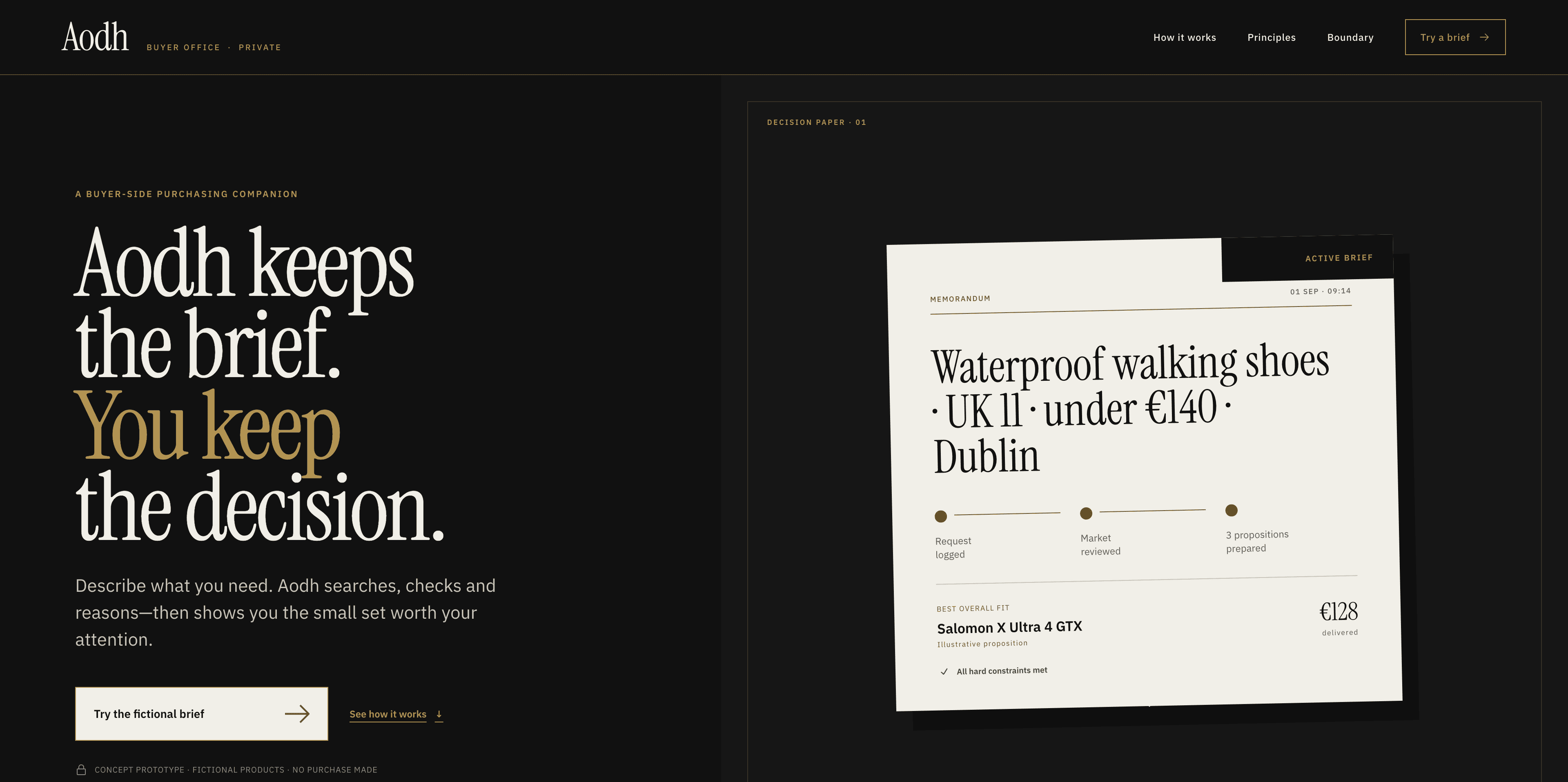
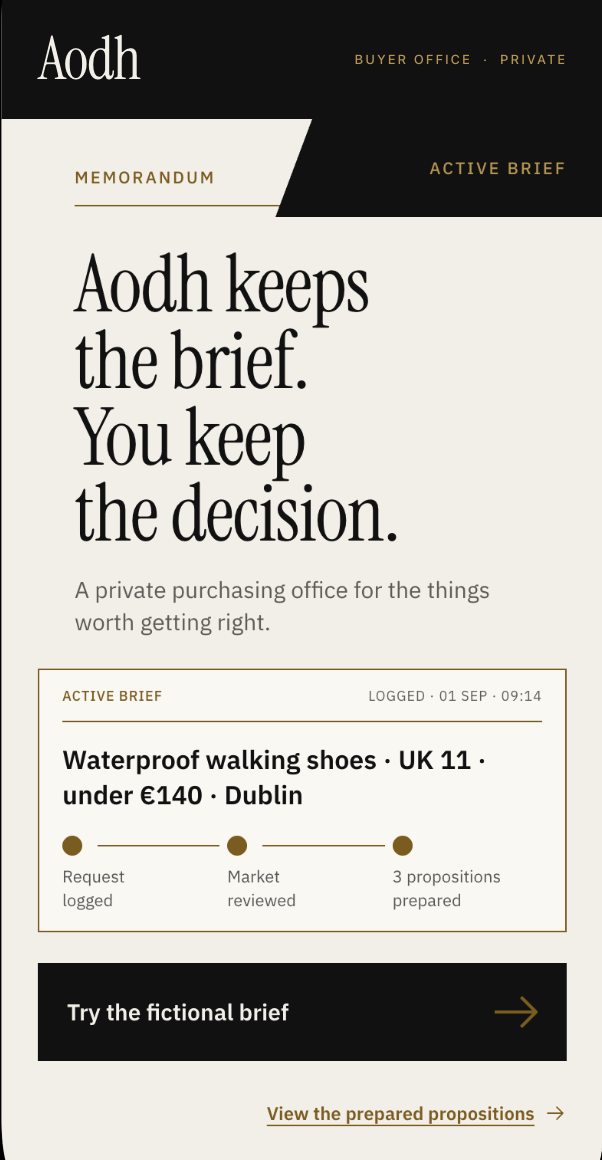
A buyer-side decision companion that turns a stated need into three evidence-backed propositions, makes trade-offs visible and stops before purchase.

Concept prototypeValidation not run
Role
Independent product lead across product thesis, buyer journeys, trust boundaries, decision logic and concept prototyping.
Maturity boundary
The buyer-side thesis, product model and synthetic interface concept are designed. The validation plan is adopted but unexecuted. No production application, live commerce, payments, persistence, durable memory or autonomous purchasing exists.

CONCEPT PROTOTYPE

An interaction hypothesis, not a shopping engine.

Synthetic concept prototype · August 2026Every product, merchant, price, evidence claim and outcome shown here is illustrative. There is no live search, account, persistence, checkout, payment or purchasing authority.

CONTEXT

Commerce systems are largely designed to help merchants convert demand. Shopping Aodh asks what changes when an AI system is accountable to the quality of one buyer's decision instead of transaction volume.

MY CONTRIBUTION

I developed a buyer-side product thesis and synthetic Buyer Mission concept that separates hard constraints from preferences, returns three distinct propositions and exposes the evidence, uncertainty and trade-offs behind each recommendation.

WHAT IS TRUE NOW

A pre-development product model now makes the core interaction and trust questions concrete. A bounded, local, recommendation-only validation plan has been adopted but not yet executed.

  • Buyer-side allegiance
  • Three, not thirty
  • Receipts before confidence

CONTEXT & PROBLEM

The buyer needs an agent with the right allegiance.

Search, recommendation and checkout can make buying easier without making the decision better. The deeper question is whether an agent can represent the buyer's constraints, preferences and longer-term interests.

That may mean recommending the cheaper option, a local or second-hand alternative, waiting, repairing what already exists or making no transaction at all.

BUYER MISSION

Name the need before opening the catalogue.

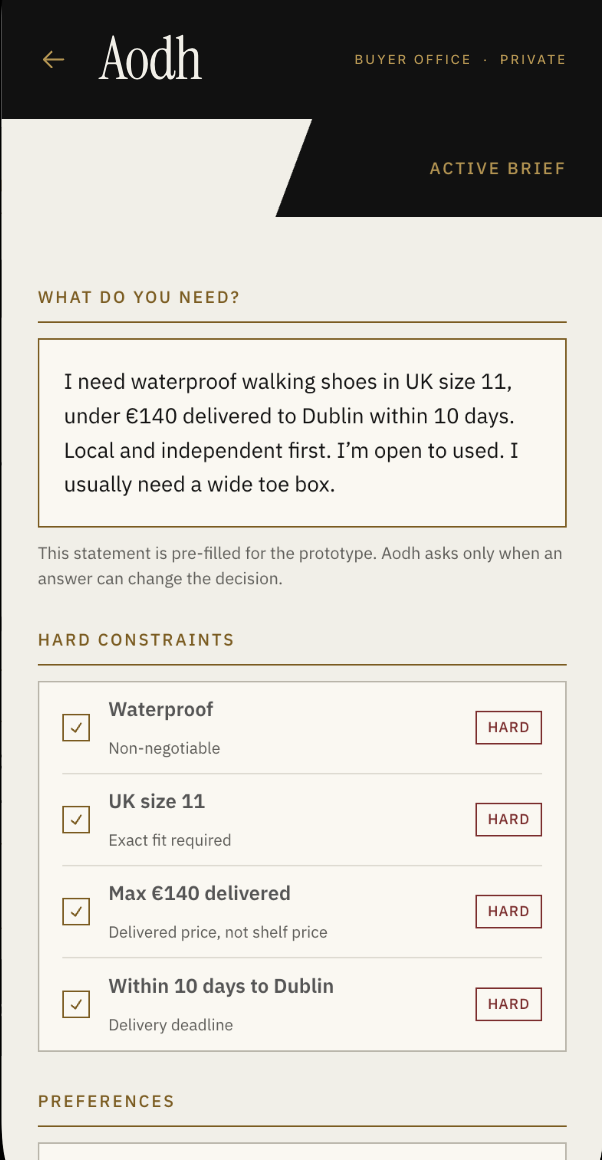
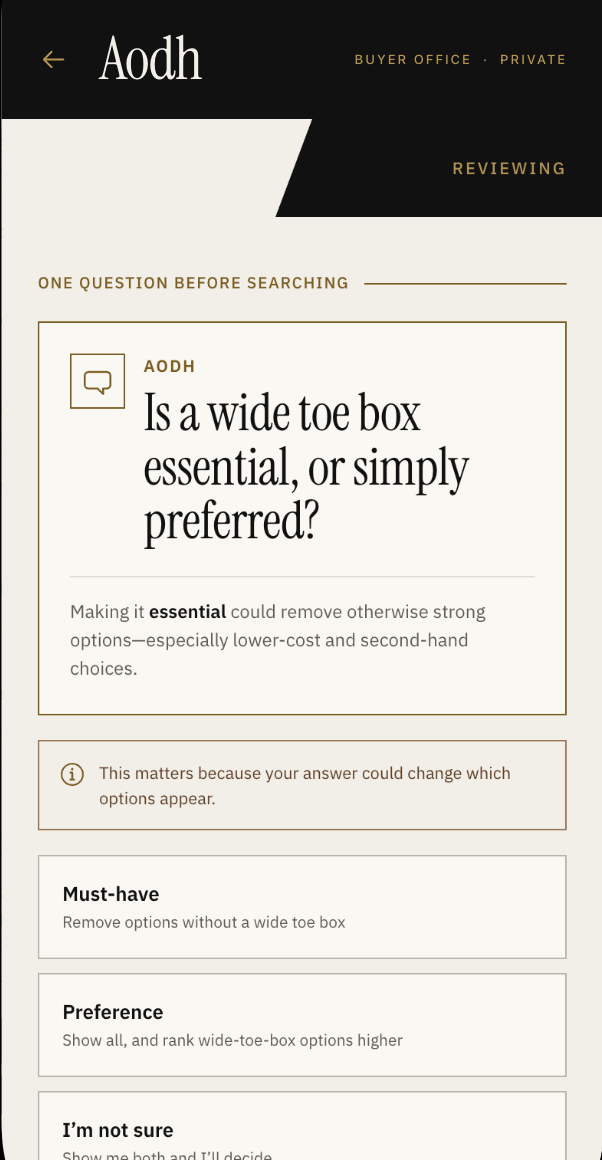
A Buyer Mission begins with the problem in the person's own words, then separates hard constraints such as fit, budget and delivery from preferences such as local availability, durability or style.

The agent should ask only when an answer can materially change the decision.

DECISION EXPERIENCE

Three, not thirty.

The concept returns a small set of distinct propositions rather than another ranked catalogue: best overall fit, lower cost, or an option that serves a different priority.

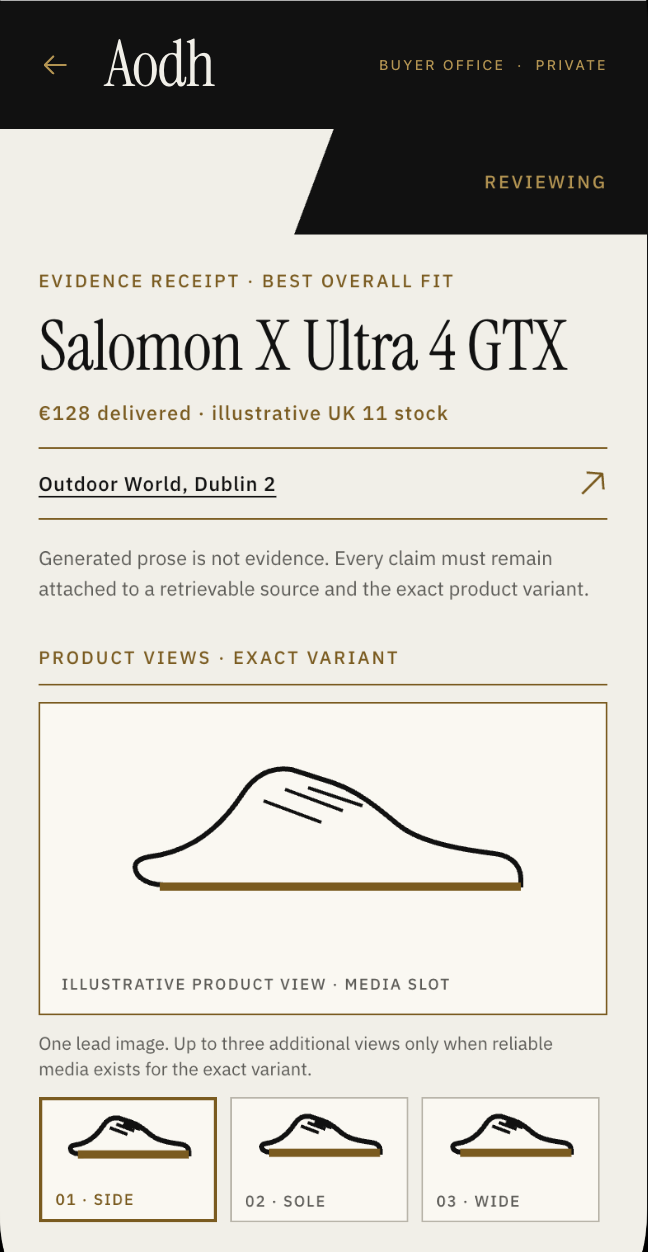
Each proposition states why it belongs, which constraints it meets and what trade-off the buyer would accept.

EVIDENCE & TRUST

Generated prose is not evidence.

Every material claim should retain a route to its source, freshness and confidence. Missing or mixed evidence should remain visible rather than being smoothed into persuasive copy.

The current concept is recommend-only and stops before purchase. Authority over transactions would have to be earned through observed usefulness and explicit user choice.

MATURITY & NEXT EVIDENCE

Prototype the decision before architecting the agent.

The current artefacts make the proposition testable without committing to product architecture or live integrations.

The next gate is evidence that real buyers find the need-first, three-proposition and receipts-led model more useful than familiar search and comparison flows.

EVIDENCE & BOUNDARIES

  • The private repository records the buyer-side thesis, decision history and an adopted validation sequence—not a working shopping service.
  • The supplied screens use synthetic products, prices and evidence. They do not depict live offers, merchant integrations or working commerce.
  • Local-first discovery, persistent personal learning and progressively greater authority remain hypotheses; no participant, market or engineering result is claimed.

WHAT I CARRY FORWARD

A useful shopping agent may sometimes recommend no transaction.

The next gate is not more interface detail. It is evidence that fewer propositions, visible trade-offs and claim-level receipts genuinely help people make better decisions.

Explore all selected work